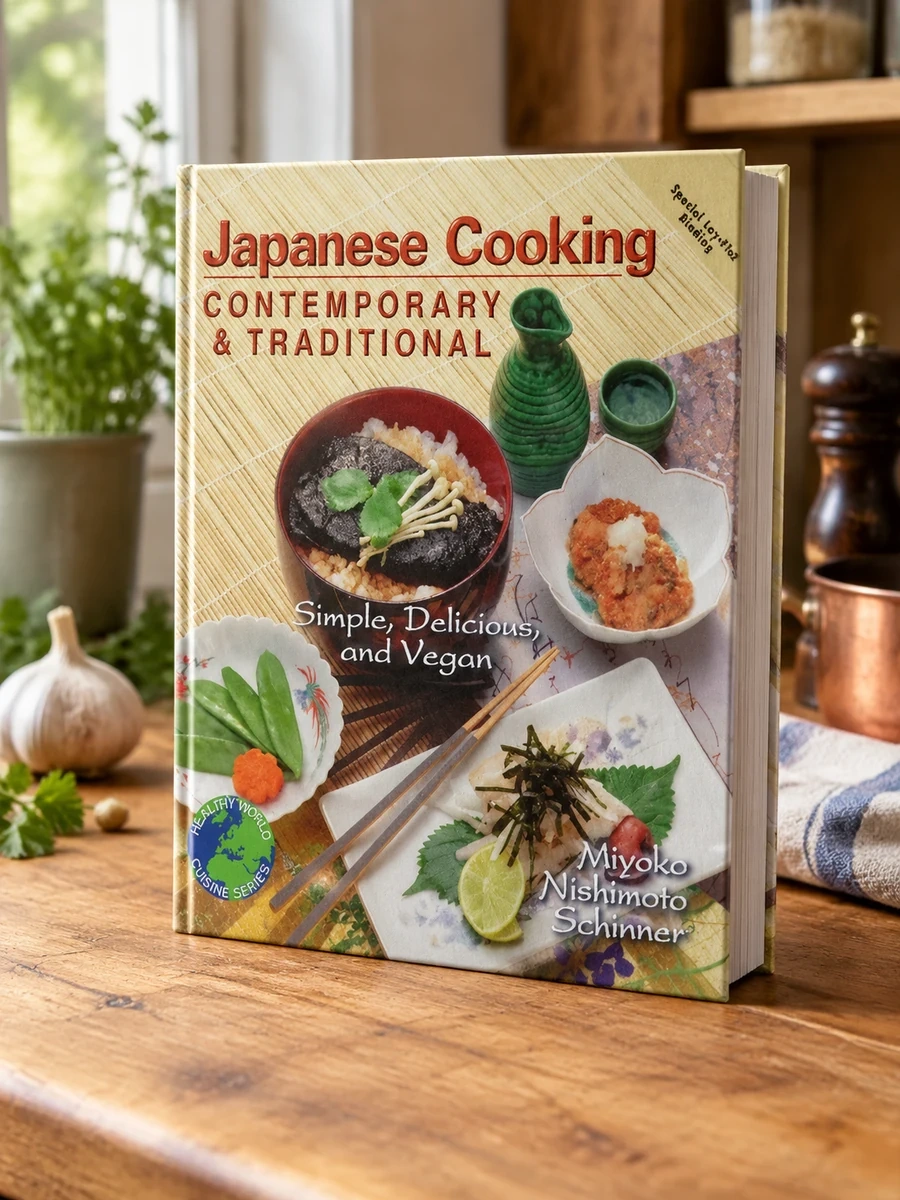
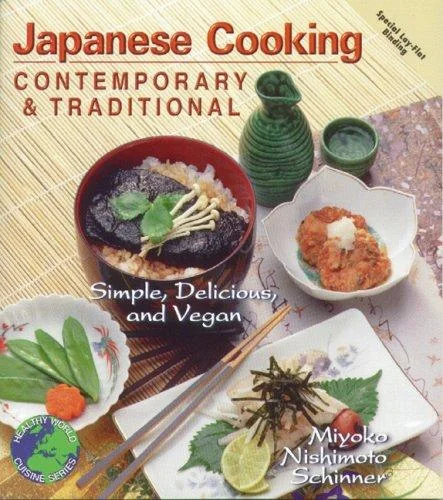
Japanese Cooking
✍️ Schinner, Miyoko NishimotoA vegan guide to traditional Japanese regional cooking by Miyoko Nishimoto Schinner
The text bridges the gap between Buddhist temple vegetarianism and everyday home cooking. Schinner explains how Japan’s historical reliance on plant-based ingredients provides ample opportunity for vegan adaptation. She does not merely list recipes but contextualizes them within the geography of Kyushu and Hokkaido. The work demonstrates that traditional Japanese cuisine is inherently adaptable to vegan diets through the use of tofu and seitan. This method preserves cultural integrity while meeting modern dietary restrictions. Readers gain insight into how regional specialties differ across the archipelago. The guide emphasizes that vegetarian cooking in Japan is not a new trend but a deep-rooted practice. It offers concrete examples of how to replace animal proteins with plant-based alternatives without losing the essence of the original dishes.
The book explores vegetarian traditions in Japan, specifically drawing from Buddhist temple practices and regional cuisines across Kyushu and Hokkaido. It highlights how vegetable and legume-based dishes have long been central to traditional Japanese food culture.


📝 Description: Japanese Cooking
💎 Expert review
⭐ Reader reviews
Reader rating
This guide succeeds by grounding vegan cooking in the geography of Kyushu and Hokkaido. It effectively demonstrates how to replace animal proteins with tofu and seitan without losing cultural essence. The text is valuable for understanding that vegetarianism in Japan is a historical practice, not a modern fad. However, readers expecting quick, fifteen-minute weeknight meals may find the regional focus too slow. It is also less suitable for those unfamiliar with basic Japanese pantry items or who prefer standardized international recipes over culturally specific adaptations.
❓ Frequently asked questions
📖 Who should read this
Home cooks seeking plant-based interpretations of traditional Japanese cuisine. Ideal for those interested in Buddhist temple vegetarianism or adapting regional dishes from Kyushu and Hokkaido. Perfect for kitchens where tofu and seitan are staples, offering a practical guide to maintaining cultural integrity while following strict vegan dietary restrictions.