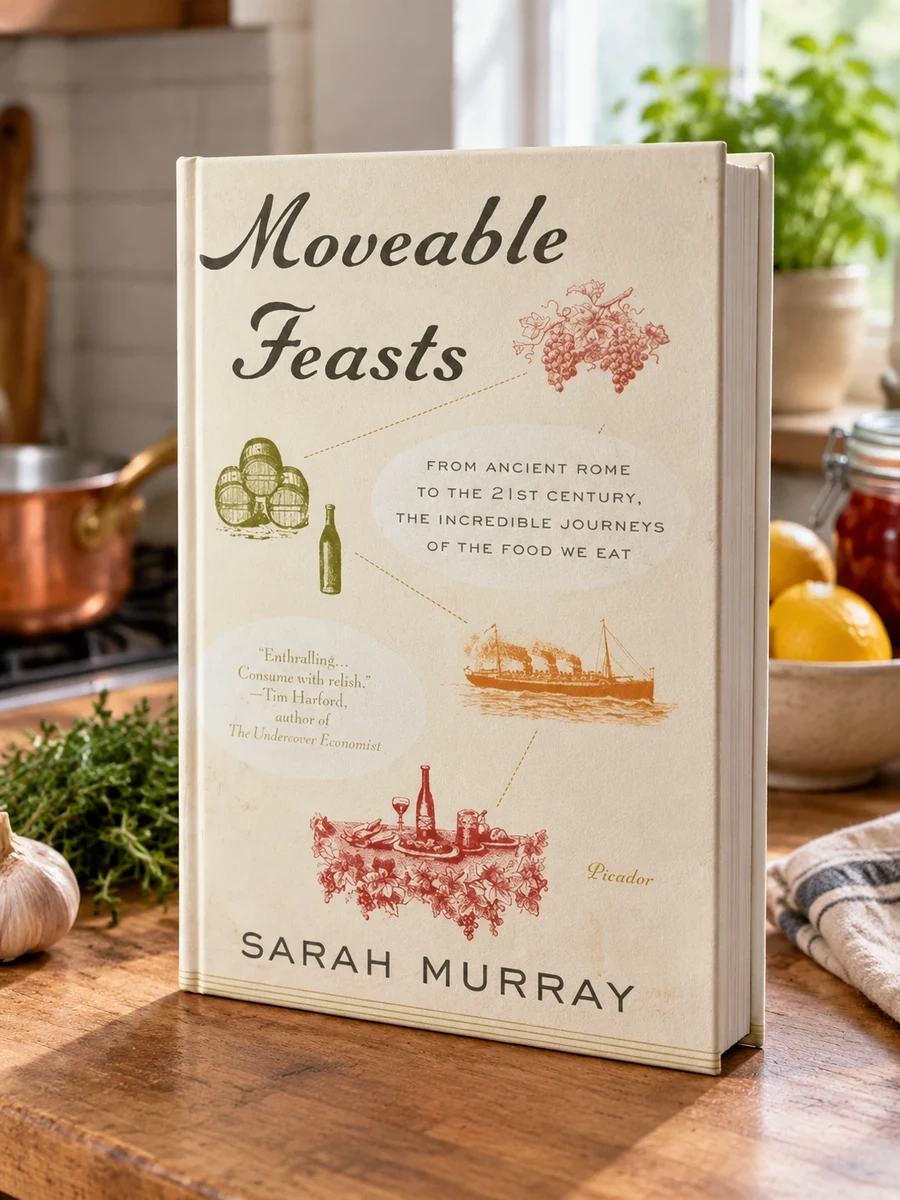
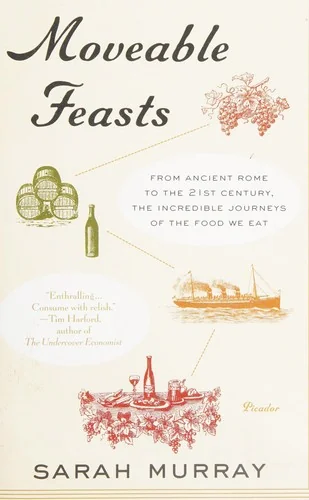
Moveable Feasts: From Ancient Rome to the 21st Century, the Incredible Journeys of the Food We Eat
✍️ Murray, SarahA history of global food logistics from ancient Rome to modern shipping.
This title shifts focus from culinary arts to the infrastructure of food distribution. Murray analyzes the economic and environmental costs of moving ingredients across borders. The narrative highlights specific trade patterns, including the Indian lunch delivery system and the transpacific salmon cycle. These examples demonstrate how political and cultural forces influence what ends up on our plates. The book treats food as a commodity shaped by centuries of logistical innovation.
The book covers the period from ancient Rome through the twenty-first century. It examines global trade networks involving places like Mumbai and China. The text addresses topics such as social history, economic history, and the food industry. It reflects on how centuries of technological development have shaped modern consumption habits.


📝 Description: Moveable Feasts: From Ancient Rome to the 21st Century, the Incredible Journeys of the Food We Eat
💎 Expert review
📖 Why choose it
Why this book is worth reading
Readers interested in the intersection of economics, transportation, and food systems will find this book essential. Murray shifts focus from cooking to the complex logistics of moving ingredients across borders, revealing how political and cultural forces influence our diets. By tracing trade patterns from ancient Rome to modern shipping, the text offers a novel perspective on global markets. It is ideal for those who enjoy understanding the hidden mechanisms behind their meals, particularly through anecdotes like Mumbai’s dabbawalas or transpacific salmon cycles. This work appeals to anyone curious about the environmental costs and technological innovations that sustain our food supply.
⭐ Reader reviews
Reader rating
Murray provides a compelling look at food distribution, though it is not for casual cooks. The narrative focuses heavily on logistics, economics, and history rather than recipes or technique. Readers seeking culinary inspiration or simple cooking guidance will likely find this dry and unengaging. However, those interested in agribusiness, economic history, and the environmental impact of global trade will appreciate the detailed analysis. The book successfully connects ancient trade routes with modern shipping containers, offering a fresh view on where meals come from. It is a thoughtful examination of food as a global commodity rather than a cultural art form.
📖 Read on the blog
🏛 Books from this publisher Picador USA
All books from this publisher →


You might also like
See more →




Have a question about this item?
Ask about the edition, condition, delivery or anything else — we reply by email or phone, usually within a day.
