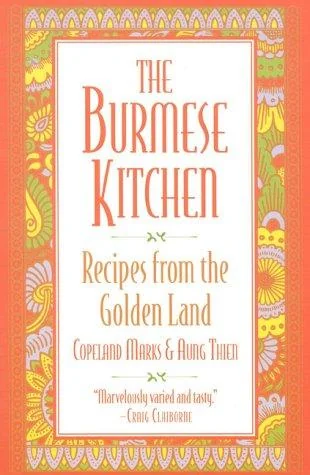
The Burmese Kitchen: Recipes from the Golden Land
✍️ Marks, CopelandCopeland Marks explores the 2500-year culinary history of Myanmar through diverse regional recipes.
Marks organizes this guide by highlighting how geography and history shape Burmese food. He connects northern Chinese influences to specific meat stews while linking coastal traditions to seafood preparations wrapped in leaves. The inclusion of border tribe recipes adds depth to the understanding of ethnic diversity within the nation's diet. This approach allows readers to see how trade, religion, and local resources have created a unique culinary identity that stands apart from neighboring countries.
This book examines the cuisine of Myanmar, formerly known as Burma. It traces food traditions back 2500 years, showing how religious, tribal, and ethnic groups have shaped the national diet. The work focuses on Central Asian and Southeast Asian cultural intersections in cooking.


📝 Description: The Burmese Kitchen: Recipes from the Golden Land
💎 Expert review
📖 Why choose it
Why this book is worth reading
Home cooks seeking to expand their repertoire beyond standard Asian fare will find this book invaluable for its deep dive into Myanmar's complex heritage. Marks provides not just recipes, but the historical context necessary to understand how geography and trade have shaped Burmese flavors. Readers interested in the specific techniques of northern meat stews or coastal seafood preparations will appreciate the detailed explanations of ingredients like toasted rice and cabbage envelopes. It is particularly useful for those who enjoy learning the 'why' behind a dish, offering a scholarly yet accessible entry point into unsung culinary traditions that blend Chinese, Indian, and Thai influences.
⭐ Reader reviews
Reader rating
Marks offers a compelling look at Burmese cuisine, though it demands patience from its audience. This is not a collection of quick fusion dishes or modern shortcuts; rather, it is a historical exploration requiring engagement with cultural context. Consequently, readers seeking immediate gratification or those unfamiliar with Southeast Asian food history may find the material dense or dry. The book excels in detailing regional variations and ethnic diversity but lacks the narrative flair of some contemporary food writing. It is best suited for dedicated enthusiasts willing to invest time in understanding the roots of these unique flavors, making it a niche resource rather than a casual weekend read.
❓ Frequently asked questions
📖 Who should read this
Home cooks seeking to understand Myanmar's culinary roots through historical context. Ideal for readers interested in regional Asian cuisines and ethnic diversity. Suitable for those wanting to explore complex flavor profiles derived from geography rather than just standard techniques.