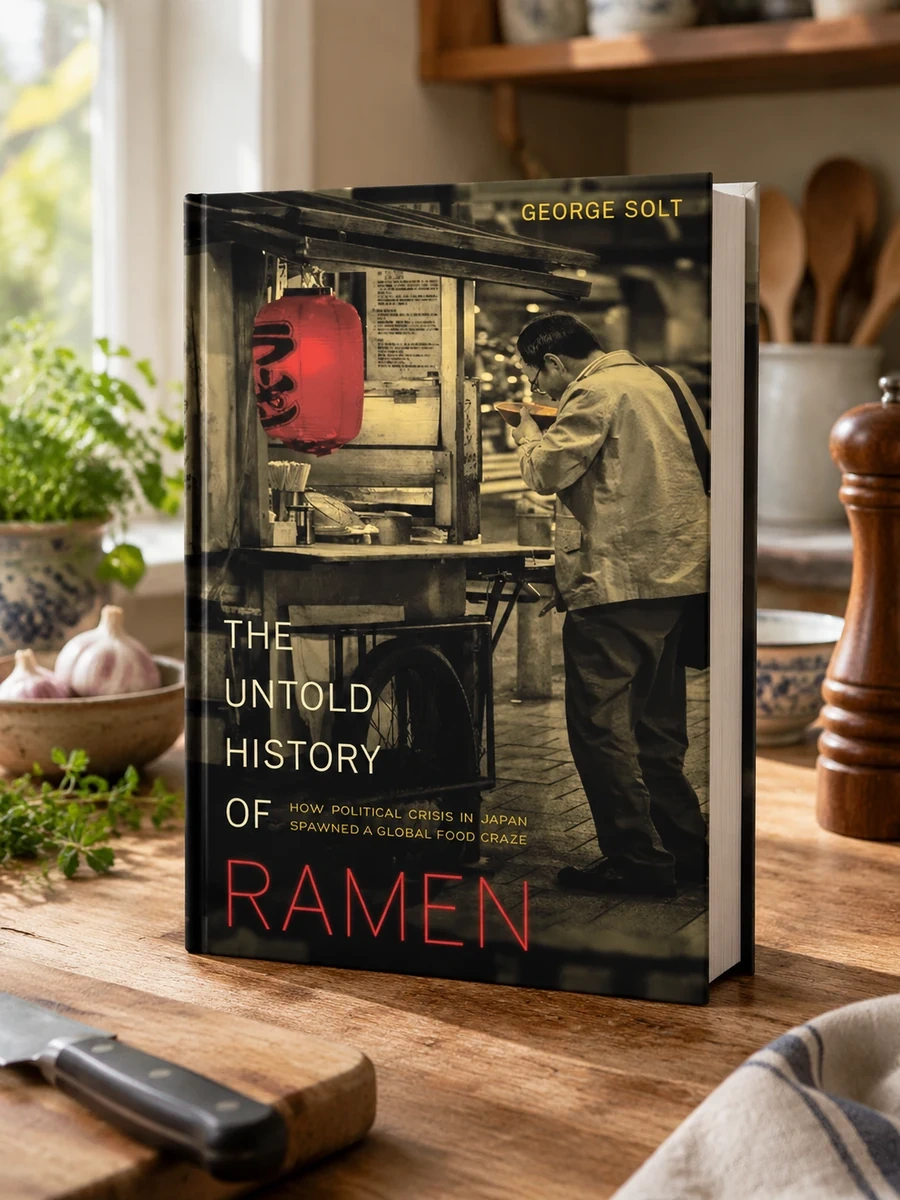
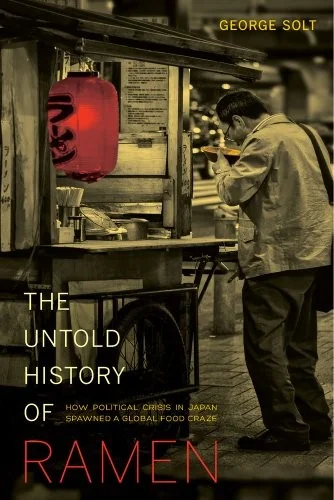
The Untold History of Ramen: How Political Crisis in Japan Spawned a Global Food Craze Volume 49
✍️ Solt, GeorgeGeorge Solt traces how political shifts turned ramen into a global symbol.
Solt argues that ramen’s global rise is tied to US-Japan relations. He uses declassified documents to show how wheat imports and labor shifts shaped the dish. The book links political crises to culinary trends, offering a unique view of cultural identity formation through food history rather than just cooking techniques.
The book covers the period from 1945 to the early 2000s. It focuses on Japan during the US occupation and subsequent Cold War era. The narrative connects these specific times of political crisis to the evolution of a global food craze.


📝 Description: The Untold History of Ramen: How Political Crisis in Japan Spawned a Global Food Craze Volume 49
💎 Expert review
📖 Why choose it
Why this book is worth reading
Readers interested in Japanese history, food studies, and political economy gain a rigorous look at how international policy shapes everyday eating habits. Solt relies on declassified U.S. government documents and Japanese sources to reveal how occupation-era American wheat imports, black markets, and Cold War labor reindustrialization established ramen as working-class fuel. He then tracks how 1990s economic stagnation elevated the dish into a symbol of national identity and a global phenomenon. Anyone seeking to understand how humble street food transforms into a recognized cultural icon through historical accident, industrial shifts, and international relations will find this detailed scholarly account deeply illuminating.
⭐ Reader reviews
Reader rating
George Solt delivers a compelling, scholarly history that successfully links political crises to culinary evolution. By centering his analysis on declassified government documents and historical labor trends, Solt provides a fresh, analytical perspective on Japanese identity formation through food. However, this title is strictly an academic narrative rather than a culinary guide. It does not suit home cooks seeking recipes, quick meal ideas, or practical kitchen techniques. The text is dense and policy-focused, offering critical insight for historians and serious food studies readers while bypassing the practical culinary directions typical of standard shop fare. It remains a valuable addition to our ingredients and food history shelves.
❓ Frequently asked questions
📖 Who should read this
History enthusiasts and food scholars interested in postwar geopolitics will find this compelling. It suits readers who prefer cultural analysis over practical cooking instructions. Ideal for those studying how political crises shape global culinary trends and the intersection of labor, wheat imports, and national identity.