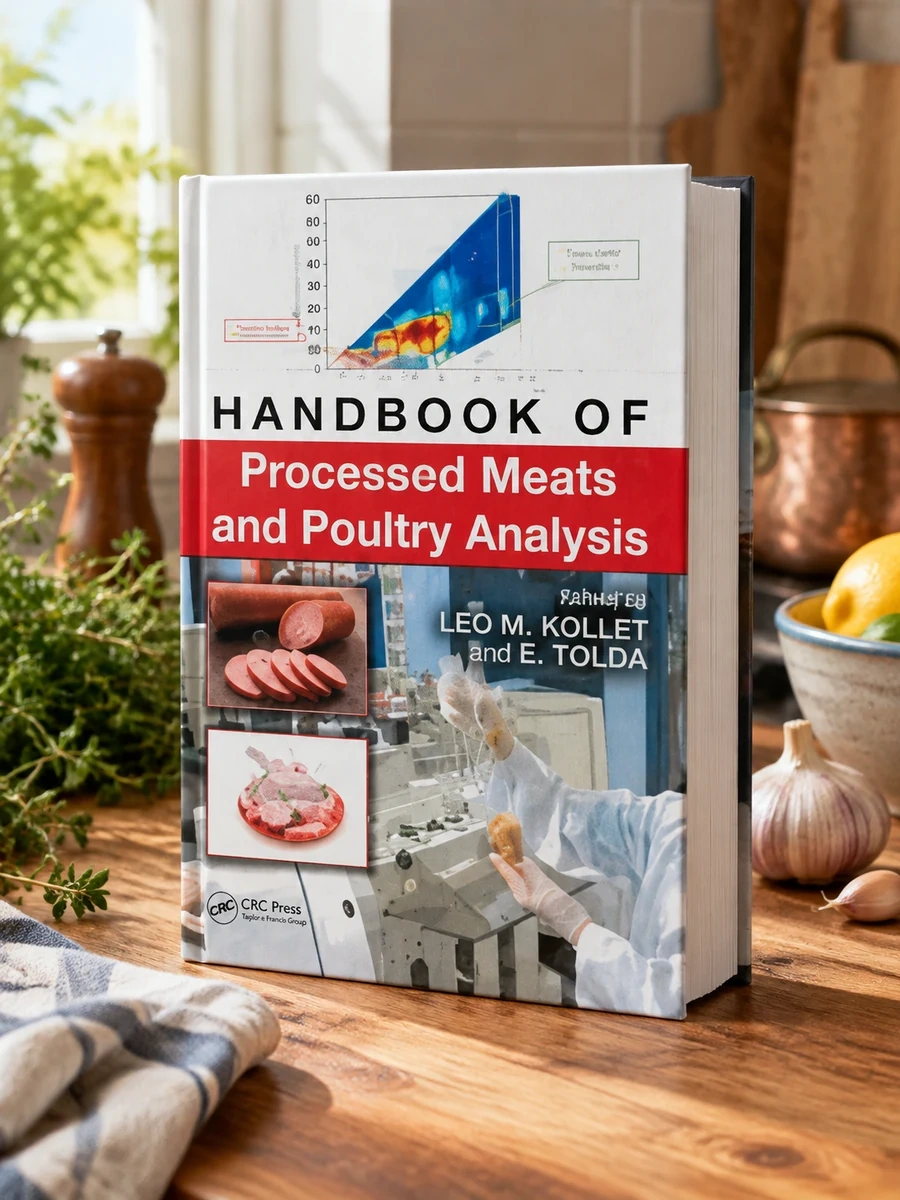
Handbook of Processed Meats and Poultry Analysis
✍️ Nollet, Leo M LA technical guide to analyzing processed meats and poultry quality and safety.
The text functions as a practical resource for monitoring the technological, nutritional, and sensory attributes of muscle foods. It outlines specific analytical tools for tracking processing control while addressing critical safety issues like microbial pathogens and contaminants. The editors compile methodologies for evaluating physical sensors, water activity, and antioxidant capacity. This approach supports professionals who need to assure product quality and manage foodborne risks in industrial settings.
Published by CRC Press in 2008, this work sits at the intersection of food science and engineering. It reflects the global importance of muscle foods in total worldwide consumption. The volume addresses the problematic nature of analyzing diverse products through standardized industrial methodologies rather than historical or cultural perspectives.


📝 Description: Handbook of Processed Meats and Poultry Analysis
💎 Expert review
📖 Why choose it
Why this book is worth reading
This volume is essential for food scientists, quality assurance managers, and researchers who require precise methodologies for evaluating processed meats and poultry. It provides a comprehensive map of analytical tools needed to monitor technological, nutritional, and sensory attributes in industrial settings. Professionals will find critical insights into tracking processing control, identifying microbial pathogens, and managing contaminants like chemical residues. The compilation of forty-five international experts offers authoritative guidance on physical sensors, water activity, and antioxidant capacity. It serves as a vital resource for those dedicated to assuring product quality and mitigating foodborne risks within the complex landscape of muscle food production.
⭐ Reader reviews
Reader rating
This reference is strictly for industry professionals and researchers, not home cooks or culinary enthusiasts seeking recipes or cultural narratives. The description confirms its focus on analytical methodology, biochemical reactions, and safety protocols rather than cooking techniques. While it lacks accessibility for general readers, it fulfills a niche need for technical precision in meat processing. Readers interested in the science behind food safety will appreciate its depth, but those looking for inspiration or traditional dishes should look elsewhere. It is a functional tool for laboratory and factory floors.
❓ Frequently asked questions
📖 Who should read this
Food scientists and quality assurance managers in industrial meat processing facilities. This resource suits professionals who need rigorous analytical methods for monitoring sensory attributes, water activity, and antioxidant capacity in poultry and processed meats to ensure safety standards.