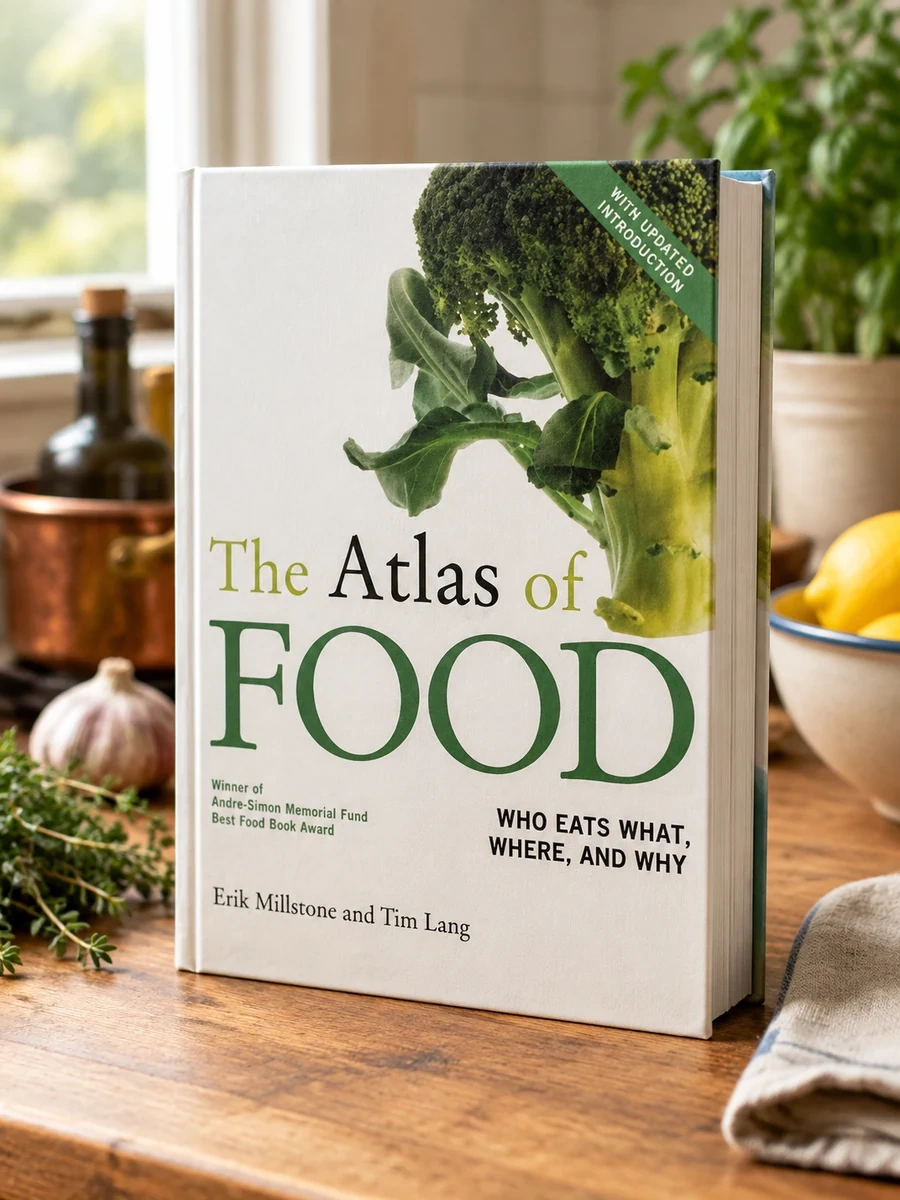
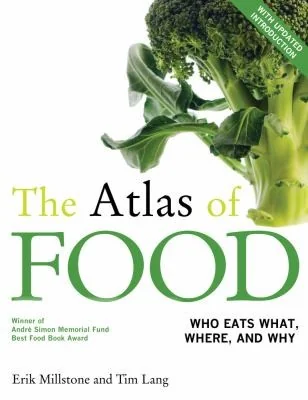
The Atlas of Food: With a New Introduction
✍️ Millstone, ErikA visual atlas exploring global food systems, agriculture, and trade policies.
The authors argue that resolving global inequality is necessary for human progress. They map out broad areas of investigation including water contamination and processing methods. The structure moves from contemporary challenges to specific sectors like farming and retailing. Data tables offer concrete reference points for the discussed topics. This approach provides a concise overview of today's food and farming concerns without focusing on culinary arts.
Published by University of California Press in 2013, this paperback edition includes a new introduction for the post-2013 period. It bridges cooking history with social science and demography, addressing cultural and social aspects of food consumption.


📝 Description: The Atlas of Food: With a New Introduction
💎 Expert review
📖 Why choose it
Why this book is worth reading
Readers concerned with the macro-level mechanics of global agriculture will find this volume indispensable for its clear visualization of complex systems. It is ideal for those seeking to understand how trade policies, water contamination, and retail structures impact nutritional outcomes like overnutrition and deficiency. By offering data tables and vivid graphics, it provides concrete reference points for the intersection of social science and food science. It suits scholars and activists who need a concise overview of farming practices and international trade without getting lost in culinary details. The new introduction ensures relevance to post-2013 agricultural concerns, making it a vital resource for grasping the structural forces that shape contemporary eating habits and global inequality.
⭐ Reader reviews
Reader rating
This atlas is a rigorous examination of food systems, prioritizing geography, policy, and social science over any culinary appeal. It will likely disappoint readers seeking recipes, kitchen techniques, or regional cooking traditions, as the focus remains strictly on broad investigative areas like processing methods and retailing stages. The tone is academic and analytical, relying on data tables and graphics to support arguments about human progress and sustainable production. While the prose is engaging, the content is dense for casual cooks. It stands as a serious resource for understanding structural forces rather than a practical guide for the home kitchen, making it essential only for those deeply invested in food politics.
❓ Frequently asked questions
📖 Who should read this
Readers interested in the sociology of eating rather than cooking techniques. Ideal for students of agricultural geography or policy analysts seeking data on global trade. It suits those who prefer visual maps and tables over step-by-step culinary instructions for their kitchen research.