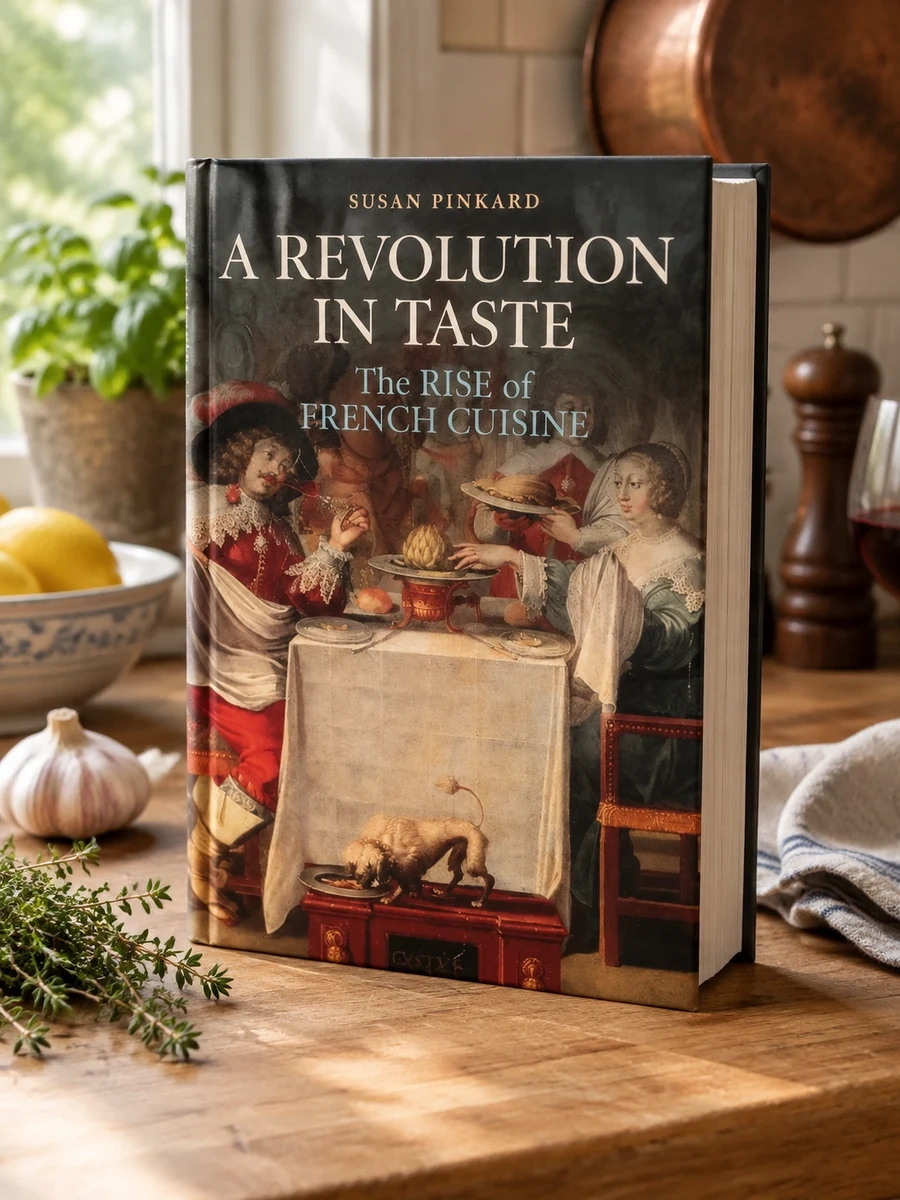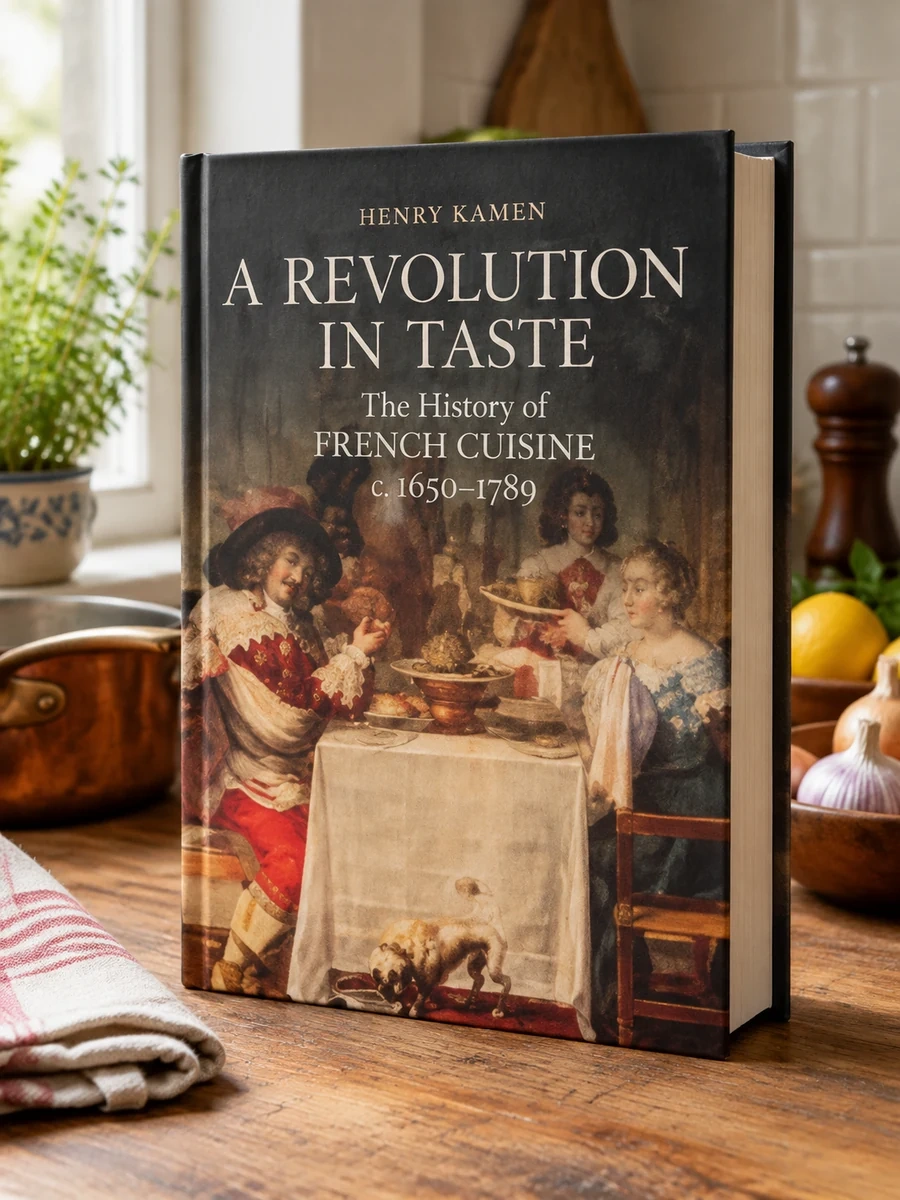

A Revolution in Taste
✍️ Pinkard, SusanA scholarly history of how modern French cuisine emerged during the Ancien Regime.
Susan Pinkard examines the origins of contemporary French culinary habits in her study of the Ancien Regime. She argues that this period broke with ancient traditions to create a new aesthetic where food and wine linked humans to nature. The text traces these changes through shifts in material culture, social transformations, medical theory, and Enlightenment thought. Pinkard covers the era from the early modern period up to the decades before 1789, detailing the rise of cuisine bourgeoise and early nouvelle cuisine. The author provides historical recipes adapted for modern kitchens to illustrate these technical evolutions. This work suits readers interested in the intellectual and social history of French food. It may not appeal to those seeking simple contemporary recipes without historical context. The book offers a clear view of how medical and philosophical ideas shaped what became authentic French cooking. Pinkard’s analysis reveals how simple preparations and authentic ingredients defined this new style. She connects these culinary shifts to broader cultural meanings in eighteenth-century France. The narrative remains focused on the development of taste rather than just technique.
The book focuses on France during the Ancien Regime, specifically from the 1650s through the decades before 1789. It examines how culinary traditions originated in antiquity and evolved into a distinct culture of food and drink linked to nature.


📝 Description: A Revolution in Taste
💎 Expert review
📖 Why choose it
Why this book is worth reading
Readers interested in the intellectual and social history of French food will gain a deep understanding of how philosophy and medical theory shaped authentic cooking. Susan Pinkard explores how a break with ancient traditions created a new aesthetic connecting food and wine to nature. The volume details the rise of cuisine bourgeoise and early nouvelle cuisine, connecting simple preparations and authentic ingredients to broader cultural meanings in eighteenth-century France. Furthermore, the inclusion of historical recipes adapted for modern kitchens allows readers to experience these technical evolutions firsthand, making it an invaluable resource for anyone seeking to understand the deep roots of contemporary culinary habits.
⭐ Reader reviews
Reader rating
Susan Pinkard delivers a focused and rigorous analysis centering on the development of taste rather than just technique, making this work ideal for those drawn to intellectual food history. However, it may not appeal to readers seeking simple contemporary recipes without historical context. The narrative meticulously navigates social transformations and Enlightenment thought, yet those looking for a standard, straightforward cookbook will find the academic approach and historical focus require a different kind of engagement. It stands as a brilliant bookshelf addition for dedicated food historians, while casual cooks might prefer works less weighed down by historical and philosophical exegesis.
❓ Frequently asked questions
📖 Who should read this
Readers interested in the intellectual history of French cuisine during the Ancien Regime will appreciate this scholarly approach. It suits those who enjoy connecting medical theory and Enlightenment thought to culinary evolution rather than home cooks seeking quick, modern dinner ideas without historical context.