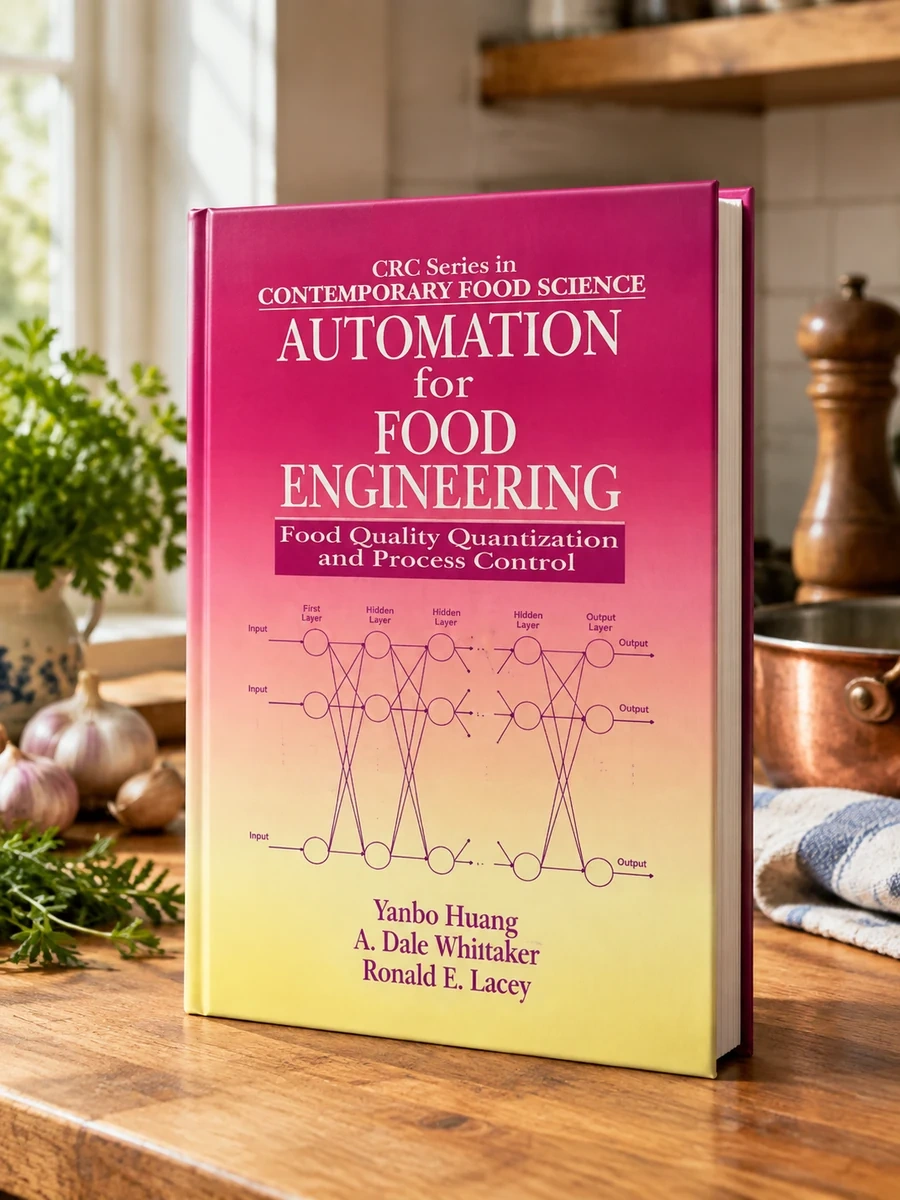
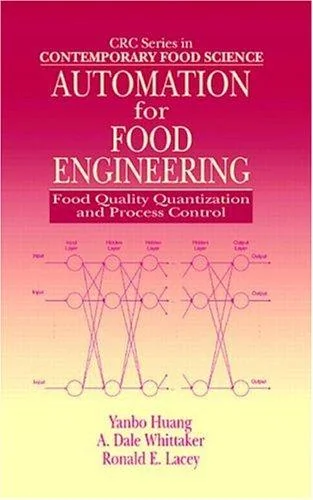
Automation for Food Engineering: Food Quality Quantization and Process Control
✍️ Huang, YanboA technical guide to automating food quality control using advanced data analysis methods.
The text focuses on the systematic application of automation technologies to improve food safety and quality. It bridges the gap between theoretical algorithms and practical implementation in food engineering projects. The author highlights how electronic and computer advancements have driven progress in this sector over recent decades. Specific attention is given to the development of techniques for automated evaluation rather than general cooking methods.
The book reflects the significant push forward in automation within the food industry driven by electronics and computer technologies. It addresses the need for more nutritious, better quality, and safer items for consumers through advanced engineering methods.


📝 Description: Automation for Food Engineering: Food Quality Quantization and Process Control
💎 Expert review
📖 Why choose it
Why this book is worth reading
Engineers, researchers, and technical professionals working at the intersection of electronics, computer technology, and food processing gain essential insights from this resource. The text provides a systematic study of concepts, principles, and practices in food quality quantization and process control. Readers benefit from detailed frameworks covering data acquisition, analysis, modeling, prediction, and control within industrial settings. Furthermore, the inclusion of advanced methods such as wavelet analysis, artificial neural networks, machine vision, elastography, and electronic nose prototypes equips practitioners with cutting-edge tools to improve food safety and quality systematically.
⭐ Reader reviews
Reader rating
Yanbo Huang’s technical volume delivers a rigorous, specialized examination of how automation shapes food engineering through quality quantization and process control. By employing real-world examples and case studies from actual engineering projects, the text effectively illustrates how complex mathematical and statistical modeling function in practice. However, prospective buyers must note that this work is strictly tailored for industrial technology and engineering applications. It does not serve home cooks, culinary historians, or general readers seeking recipes or everyday cooking methods. Those without a solid background in engineering and computer technology will find the content dense and inaccessible.
❓ Frequently asked questions
📖 Who should read this
Food engineers and quality control specialists seeking practical automation strategies for industrial food processing. This guide suits professionals who need to bridge theoretical algorithms with real-world implementation in manufacturing settings rather than home cooks.