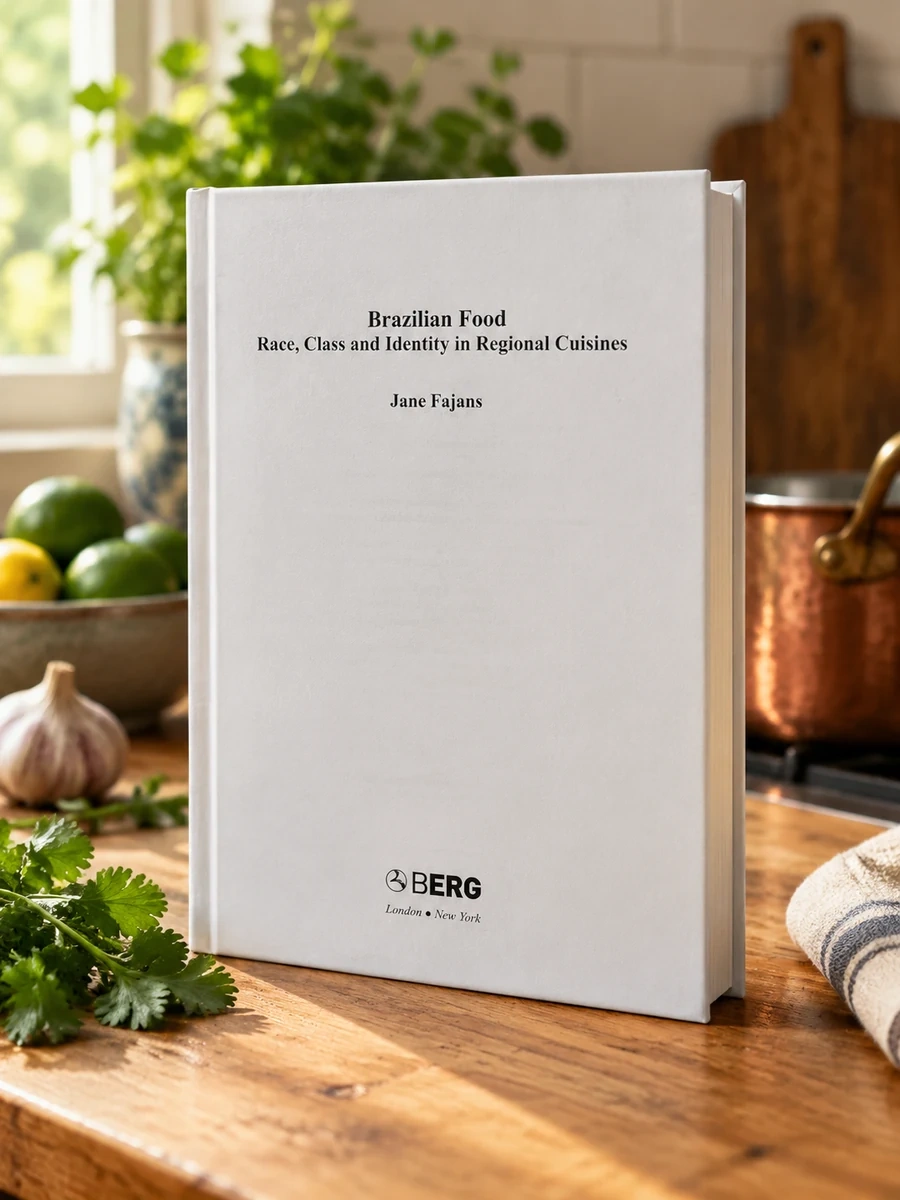
Brazilian Food
✍️ Fajans, JaneA scholarly look at how food constructs identity in Brazil's diverse regions.
The book treats cuisine as a mechanism for cultural promotion and internal unity. Fajans argues that the variety of climates and languages in Brazil creates distinct regional identities, which are reinforced through shared culinary customs. By examining key case studies, the author shows how these local traditions become national symbols. The text connects historical immigration patterns to modern foodways, explaining how past settlements continue to influence current tastes. This approach links social science concepts with agricultural practices, showing how food policies and tourism strategies work together to define Brazil's image abroad.
Published in 2012 by Bloomsbury Publishing PLC, this paperback sits at the intersection of social science and regional studies. It addresses topics within agriculture, public policy, and anthropology, focusing on how cultural and social factors shape identity in South American contexts.


📝 Description: Brazilian Food
💎 Expert review
📖 Why choose it
Why this book is worth reading
Readers interested in the intersection of agriculture, social science, and public policy will find significant value in this text. It is essential for scholars analyzing how shared views and historical immigration patterns create cohesion within specific Brazilian regions. The book offers a unique perspective on how food serves as a vital tool for attracting tourists and promoting Brazilian culture globally. Those studying the mechanics behind gastronomy rather than seeking simple recipes will gain deep insights into how local traditions become national symbols through the lens of diverse climates and languages.
⭐ Reader reviews
Reader rating
Jane Fajans provides a scholarly examination of cuisine as a mechanism for identity construction in Brazil. The text successfully links historical settlement patterns to modern foodways, demonstrating how agricultural practices define the nation's image abroad. However, this is not a practical guide for home cooks; those seeking simple recipes or technical instructions will find it less useful. It is best suited for academics and enthusiasts of the anthropology of food who wish to understand the sociological impacts of cuisine. The tone is analytical rather than instructional, making it a specialized resource for understanding cultural mechanics.
❓ Frequently asked questions
📖 Who should read this
Readers interested in the intersection of culture and cuisine will find this volume essential. It suits those studying how regional identities form through shared meals rather than home cooks seeking daily dinner inspiration or quick recipe collections for immediate kitchen use.