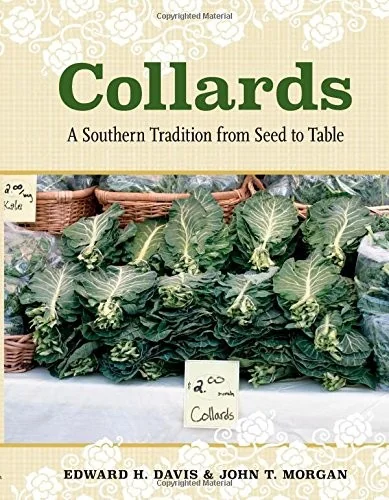
Collards: A Southern Tradition from Seed to Table
✍️ Davis, Edward HA study of collard greens in Southern culture by Edward H. Davis.
Davis positions collards not merely as a vegetable but as a cultural artifact. He analyzes how agricultural practices influenced social structures in the South. The text connects the physical act of growing greens with the broader narrative of Southern identity. By examining cultivation and consumption together, he reveals how food choices reflect historical realities. The work avoids romanticizing the past while acknowledging the deep roots of this culinary tradition.
The book situates collards within the American South, focusing on their role in regional agriculture and cuisine. It examines how these greens functioned as a staple crop that shaped local communities and daily life over time.


📝 Description: Collards: A Southern Tradition from Seed to Table
💎 Expert review
📖 Why choose it
Why this book is worth reading
Readers seeking a deep dive into the intersection of agriculture and culture will find this volume essential. It appeals to gardeners wanting horticultural context alongside those interested in how food choices reflect historical realities. The book serves as a bridge between the garden plot and the dinner table, highlighting the labor involved in growing and preparing greens. Those curious about the enduring presence of collards in American life will appreciate Davis’s grounded look at sustenance and symbol. It is ideal for readers who value cultural heritage over quick recipes.
⭐ Reader reviews
Reader rating
Edward H. Davis offers a scholarly examination of collards as more than just a vegetable, positioning them as a key to understanding Southern social structures. The text blends practical gardening advice with culinary history, avoiding romanticization while acknowledging deep roots. However, this is not for those seeking quick, modern recipes without historical context. Readers looking solely for cooking instructions may find the cultural analysis dense. It suits those interested in edible gardening and social science perspectives on agriculture. The tone is respectful of foodways complexity, linking agricultural effort to cultural output effectively.
❓ Frequently asked questions
📖 Who should read this
Readers interested in Southern history and agricultural sociology will appreciate this exploration of collard greens. It suits those who view cooking as a cultural act rather than just a domestic chore. Ideal for scholars or home cooks seeking to understand the social structures behind traditional vegetable cultivation in the American South.