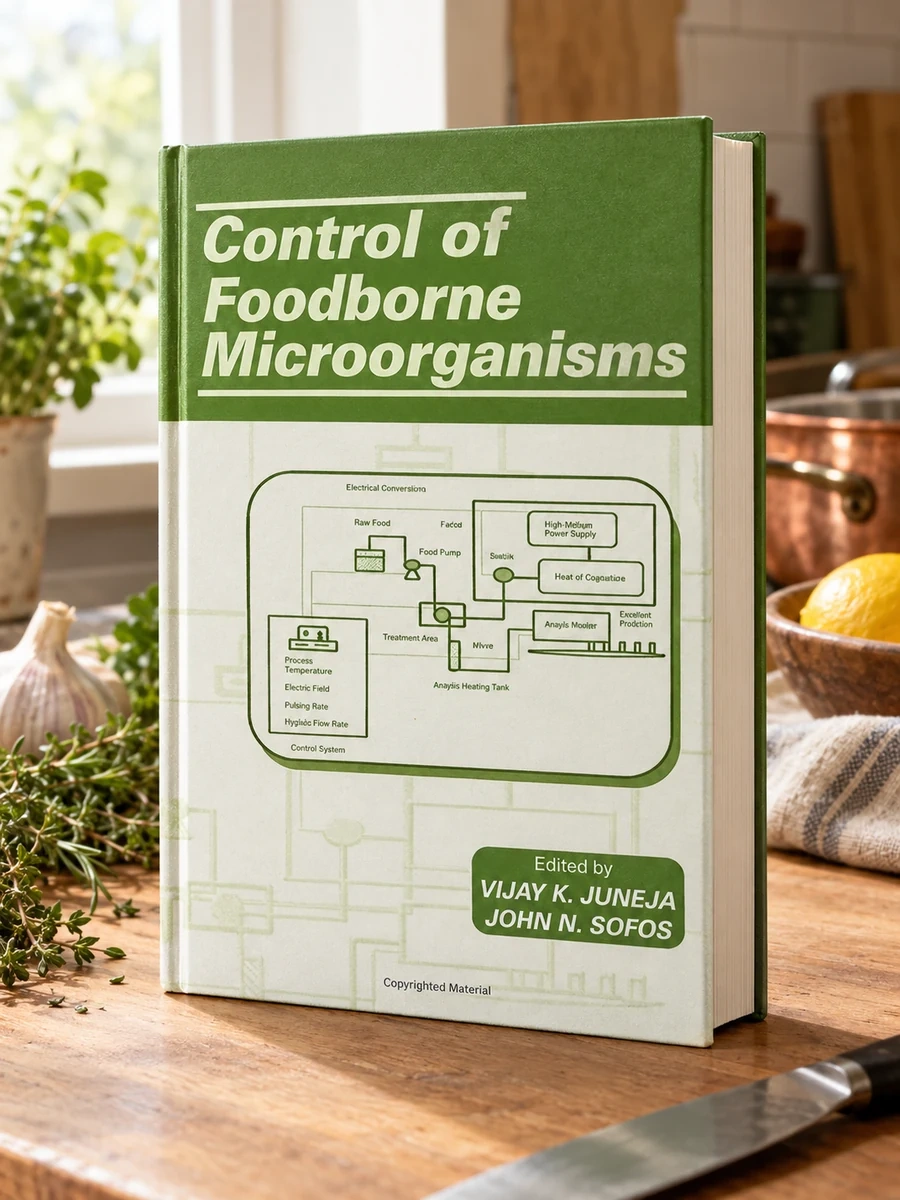
Control of Foodborne Microorganisms
✍️ Juneja, Vijay KA technical guide to controlling foodborne pathogens using traditional and emerging microbial inactivation methods.
Juneja’s work addresses the intersection of food science and microbiology by exploring how microorganisms can be controlled within food systems. The book emphasizes practical applications for reducing illness while enhancing overall quality. It covers subjects ranging from general medical principles to specific engineering challenges in packaging and processing. The inclusion of visual aids like tables supports the detailed discussion of inactivation techniques. This approach ensures that complex scientific concepts are presented with clarity for those working in related technical fields.
Published in 2001 by CRC Press, this volume sits at the convergence of food science, microbiology, and engineering. It reflects early twenty-first-century efforts to integrate traditional preservation methods with emerging technologies for enhancing food security and reducing health risks associated with microbial contamination.


📝 Description: Control of Foodborne Microorganisms
💎 Expert review
📖 Why choose it
Why this book is worth reading
This book serves professionals in food safety, microbiology, and engineering who need detailed technical information on pathogen control. It bridges food science and engineering to explain how interventions affect viability using data from technology sectors. Readers gain a structured overview of scientific approaches to hygiene in production environments. It is essential for those working in packaging and processing who require clarity on complex concepts through visual aids. The text supports reducing illness risk by detailing traditional and emerging inactivation techniques. It offers practical applications for enhancing product security without culinary instruction. This resource is vital for maintaining standards in industrial food systems.
⭐ Reader reviews
Reader rating
This technical guide addresses the intersection of food science and microbiology, focusing on controlling pathogens through traditional and emerging methods. While it provides a clear analysis of engineering challenges in packaging and processing, it is strictly for professionals. The inclusion of tables aids understanding but does not make it accessible to laypeople. It is not intended for home cooks seeking recipes or general readers interested in food history. The tone remains grounded in scientific inquiry rather than culinary instruction. Those looking for practical kitchen advice will find this sparse on utility. However, for experts requiring state-of-the-art methods for diminishing microbial threats, it offers a necessary, rigorous examination of hygiene standards in production environments.
❓ Frequently asked questions
📖 Who should read this
Food safety engineers and microbiologists seeking technical guidance on pathogen control. Professionals in food packaging and processing will find value in its practical applications for reducing illness while enhancing quality through established and emerging microbial inactivation methods.