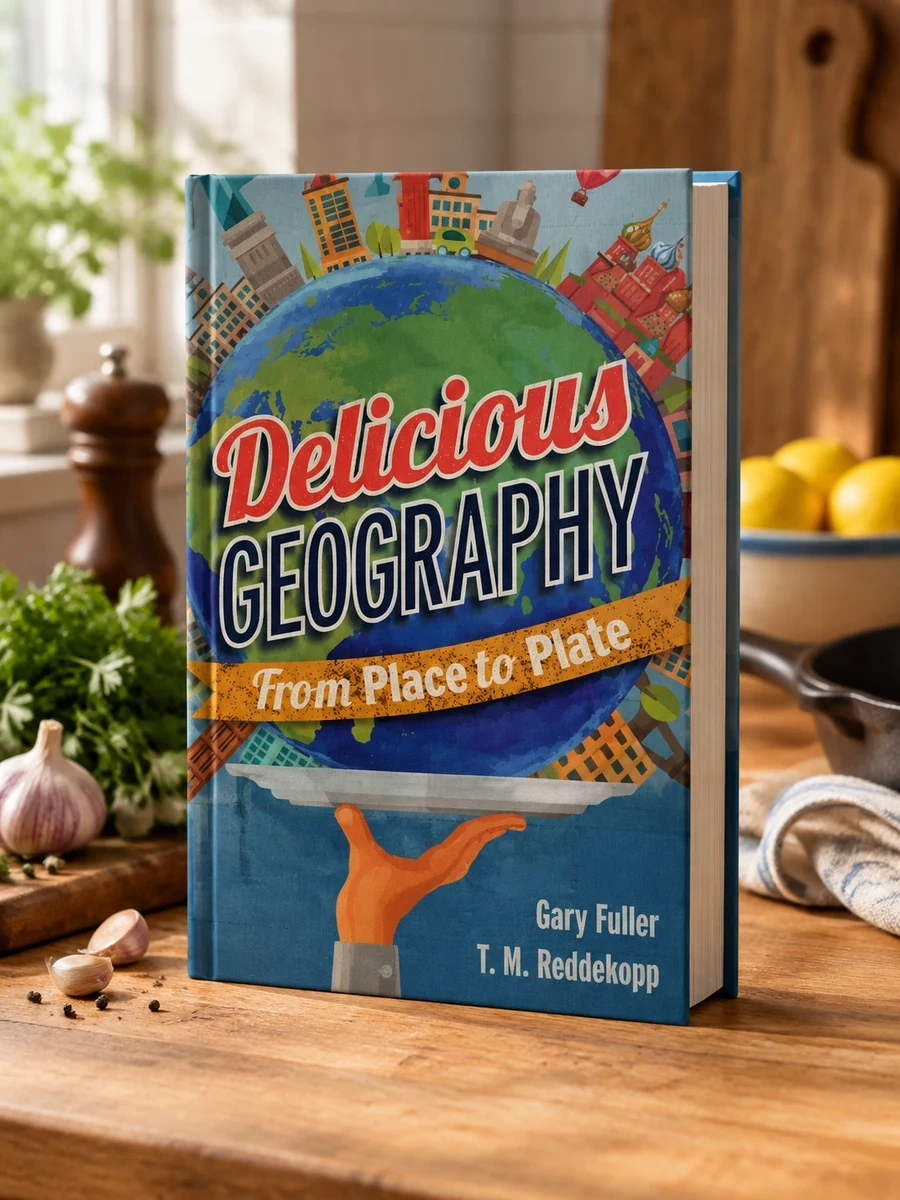
Delicious Geography: From Place to Plate
✍️ Fuller, GaryA geographer and chef explore how place shapes global cuisine through history and recipes.
Fuller and Reddekopp present a unique blend of social science and culinary arts. They use specific historical moments like Marco Polo’s travels and the dairy belt to illustrate how geography influences what we eat. The text moves from ancient domestication to modern immigration, showing how food traditions evolve. By including recipes alongside geographical analysis, they make abstract concepts tangible. This approach helps readers understand why certain foods dominate specific regions and how global connections persist despite changing cultural boundaries.
Published in 2017 by Rowman & Littlefield, this paperback sits at the intersection of social science and travel writing. It addresses agriculture, human geography, and public policy aspects of food habits. The work reflects contemporary interest in understanding regional disparities and global cultural connections through the lens of daily sustenance.


📝 Description: Delicious Geography: From Place to Plate
💎 Expert review
📖 Why choose it
Why this book is worth reading
Readers fascinated by the 'why' behind regional cuisines will find this volume uniquely rewarding. It offers a compelling narrative that connects abstract geographical concepts to tangible dining experiences. By weaving together history, agriculture, and culture, it helps fans of food writing understand the complex forces that define what we eat today. The inclusion of recipes allows enthusiasts to immediately engage with these ideas in their own kitchens, turning theoretical knowledge into practical culinary exploration for those who enjoy learning through doing.
⭐ Reader reviews
Reader rating
This title appeals primarily to readers who enjoy travelogues explaining food habits rather than those seeking strict academic theory or simple recipe collections without context. The authors successfully blend social science with culinary arts, using historical moments to illustrate geographical influence on diet. It serves best as a supplementary text for enthusiasts of agricultural history and cultural geography. Those expecting a purely instructional cooking guide may find the theoretical density high, while academic purists might desire more rigorous citation. It is a niche but valuable addition for understanding the spatial dynamics of cuisine.
❓ Frequently asked questions
📖 Who should read this
Readers interested in the intersection of geography and cuisine will appreciate this text. It suits home cooks who enjoy understanding the historical roots of their meals rather than just following instructions. Ideal for those curious about how place influences global food traditions and cultural evolution.