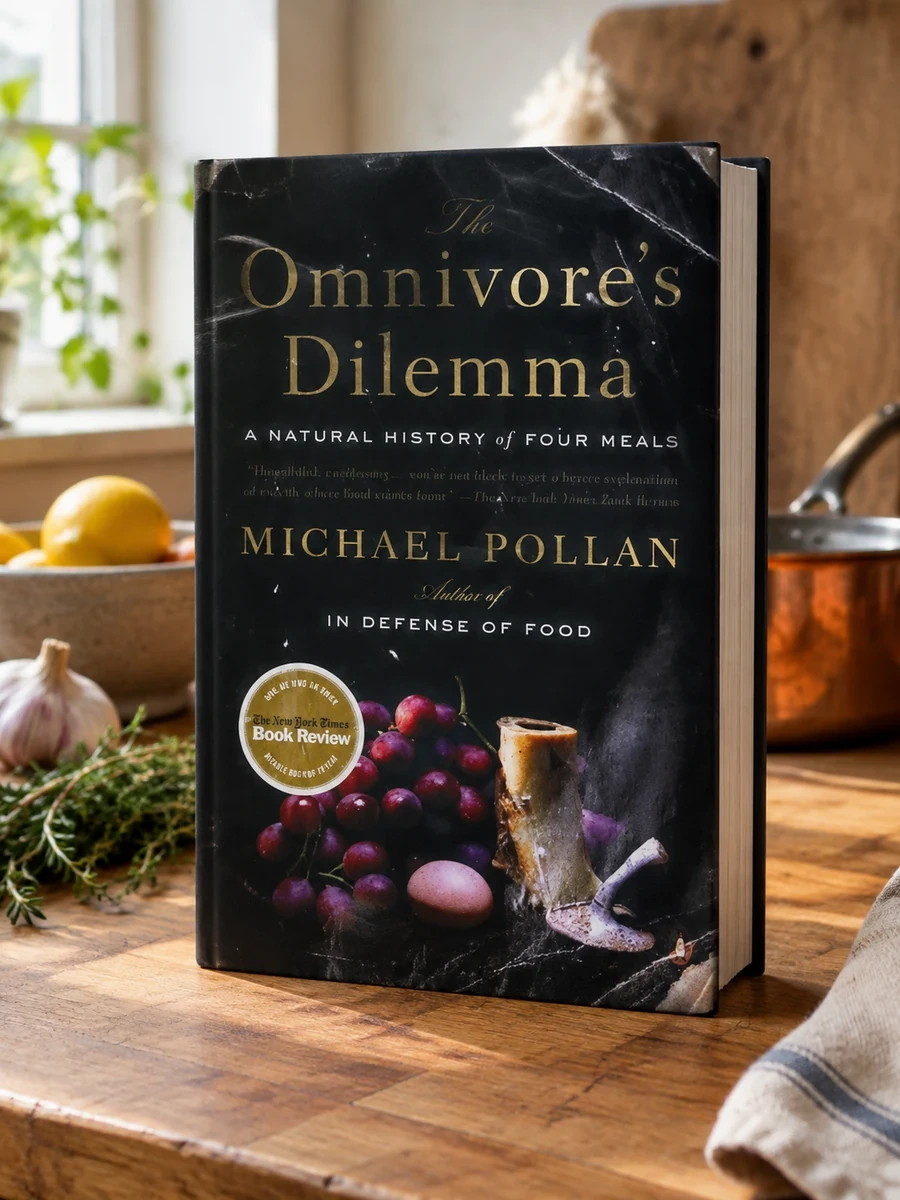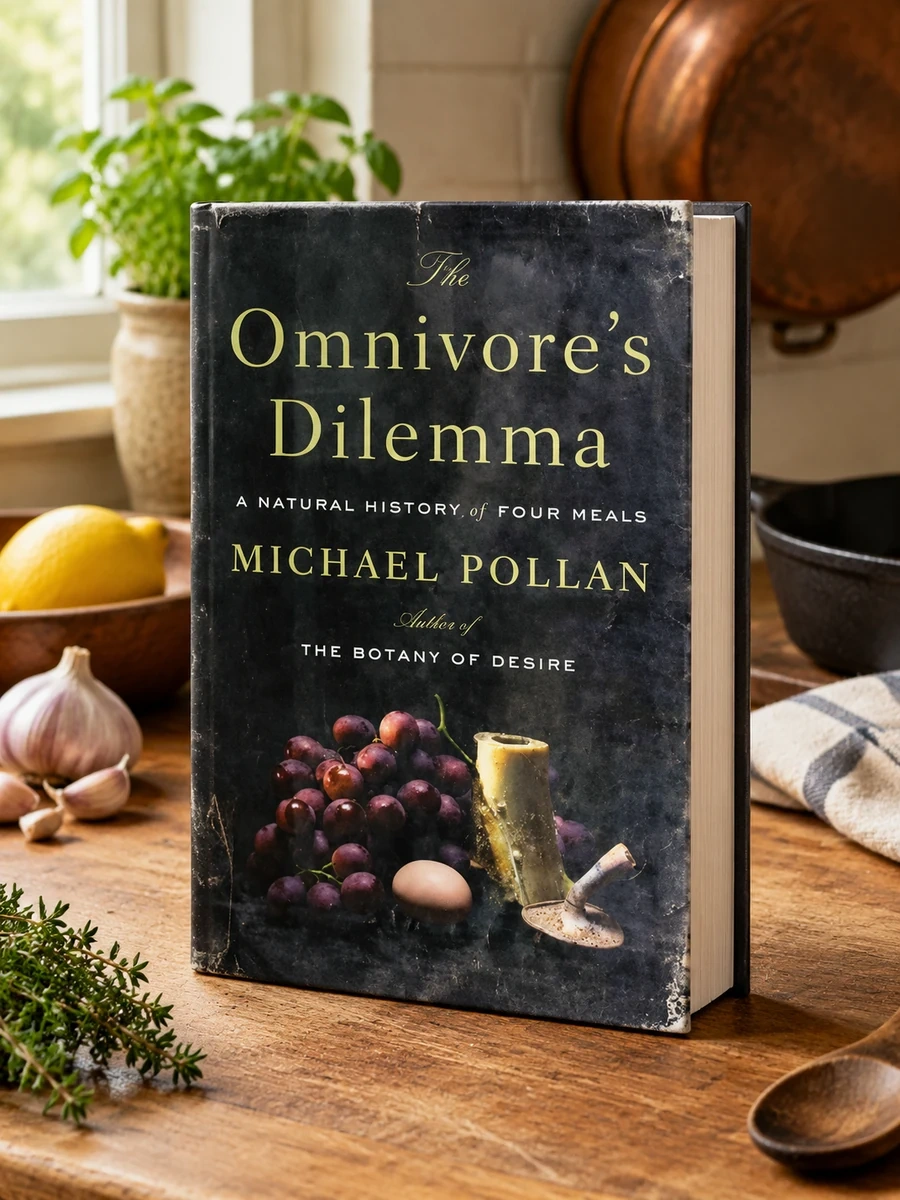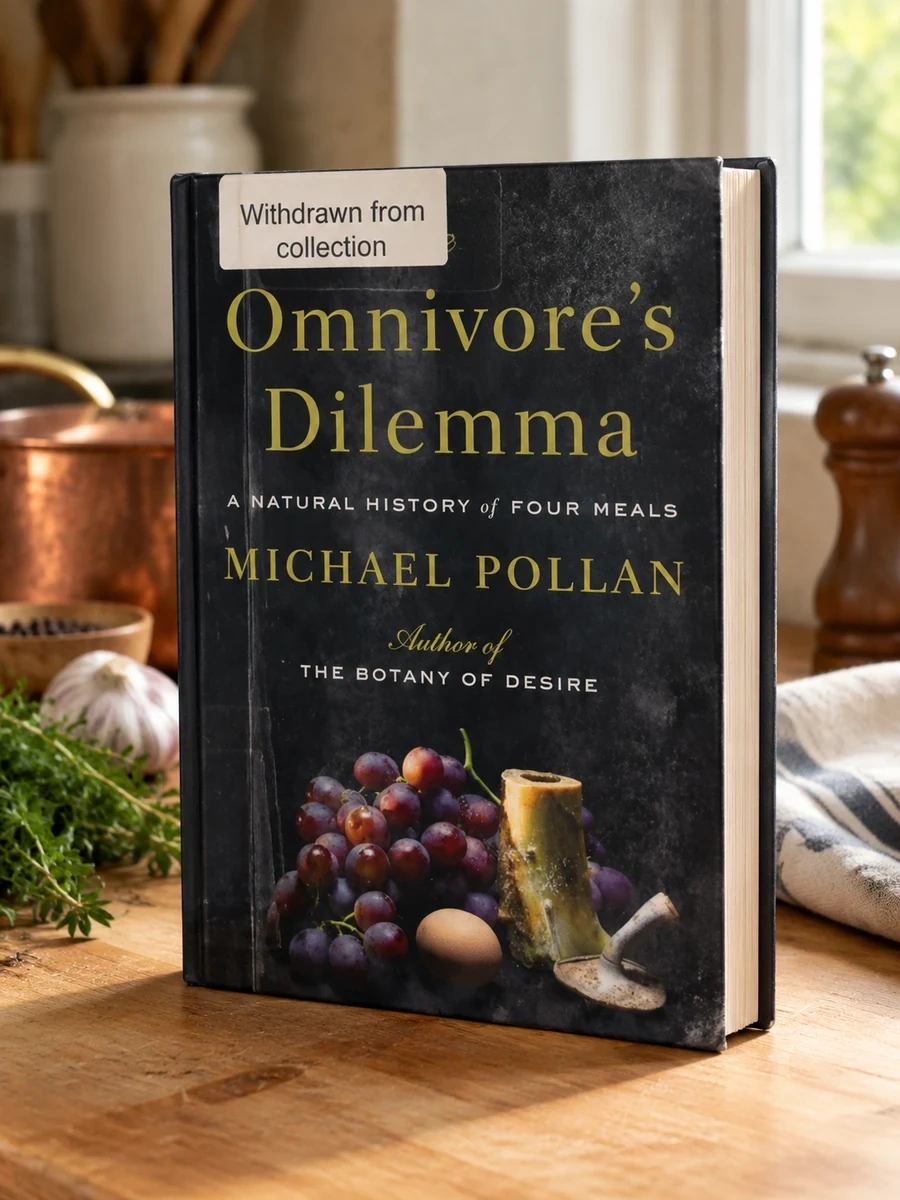
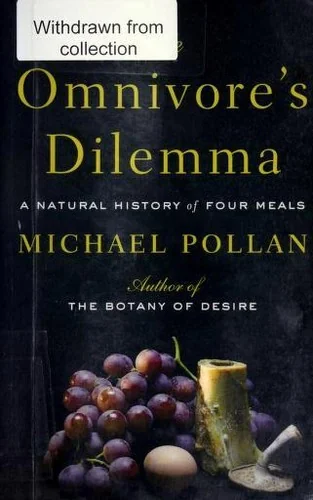
The Omnivores Dilemma
✍️ Pollan, MichaelA journey through industrial, pastoral, and personal food chains reveals our dietary responsibilities.
Pollan structures his analysis around three primary sources of American food: corn from industrial agriculture, grass from organic pastures, and wild game from foraging. He uses these frameworks to critique the modern diet's reliance on processed ingredients while advocating for a more conscious approach to consumption. The narrative moves from large-scale farming operations to personal ethical reflections, asking readers to consider the origins of their meals.
Published in 2007, this work addresses twenty-first-century food consumption. It bridges social science, anthropology, and nutrition to explain how unlimited food varieties impact health and environmental stewardship. The text sits at the intersection of cooking history and customs, offering a critical view of contemporary dietary habits.


📝 Description: The Omnivores Dilemma
💎 Expert review
📖 Why choose it
Why this book is worth reading
Readers interested in the intersection of ecology, ethics, and cuisine will find this text essential. It moves beyond mere instruction to examine the origins of our meals, offering a critical look at industrial corn, pastoral farming, and wild foraging. Those seeking to understand the hidden costs of processed foods or the philosophical weight of dietary choices will gain profound insight. It is ideal for those who view eating as an ethical act rather than just a biological necessity, encouraging conscious consumption and a deeper connection to the food system through detailed exploration of three distinct agricultural chains.
⭐ Reader reviews
Reader rating
This edition offers a dense, philosophical examination of American food sources rather than practical cooking guidance. While its analysis of industrial agriculture and pasture-based systems is compelling for those interested in food history and anthropology, it lacks the immediate utility of standard recipe collections. Readers seeking quick meals or technical kitchen advice may find its depth less accessible and its pace slow. However, for the intellectually curious diner willing to engage with complex arguments about sustainability and health, it provides a vital framework. It is not for the casual cook but for the reflective eater ready to question their daily choices.
❓ Frequently asked questions
📖 Who should read this
Readers interested in food ethics and agriculture systems will find this essential. It suits those who want to understand the origins of their meals rather than just follow recipes. Ideal for home cooks seeking deeper context for their dietary choices and ethical consumption habits.