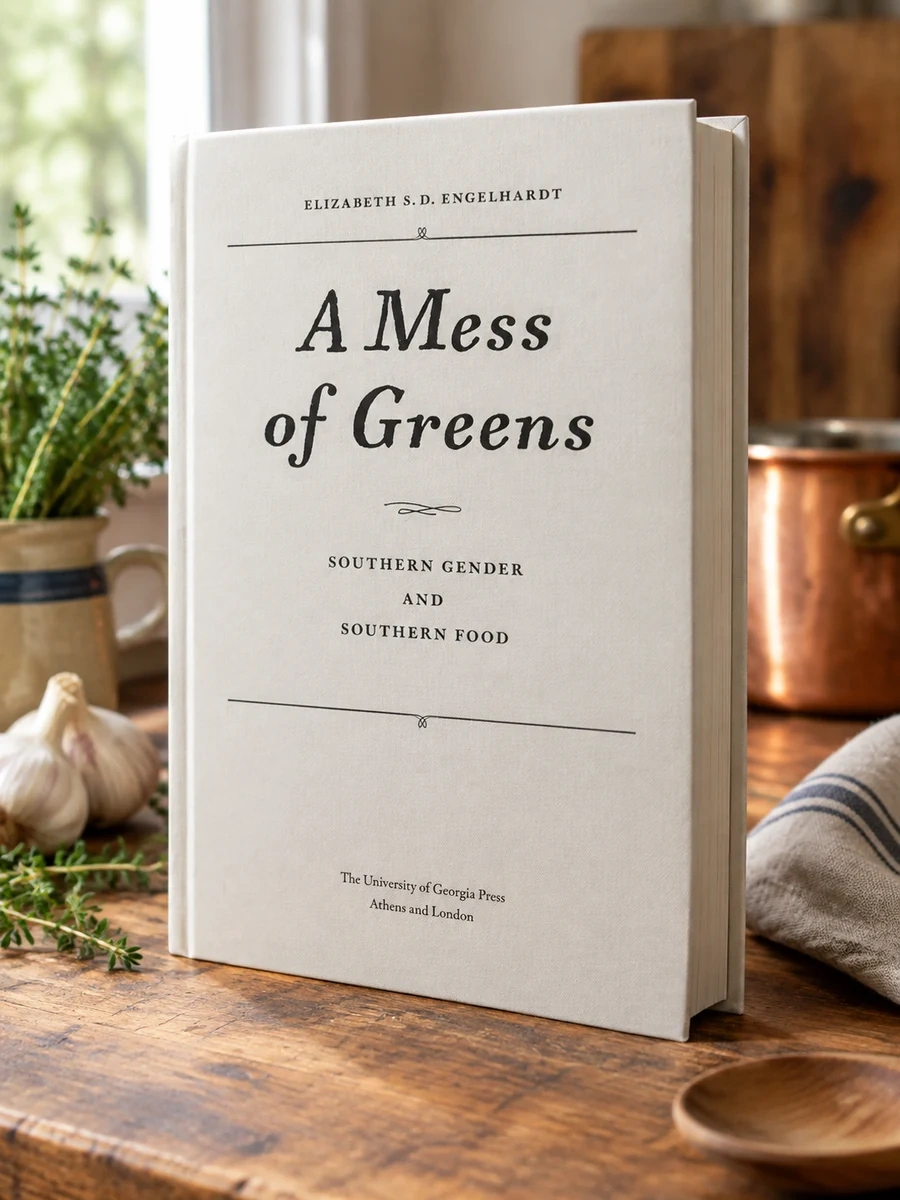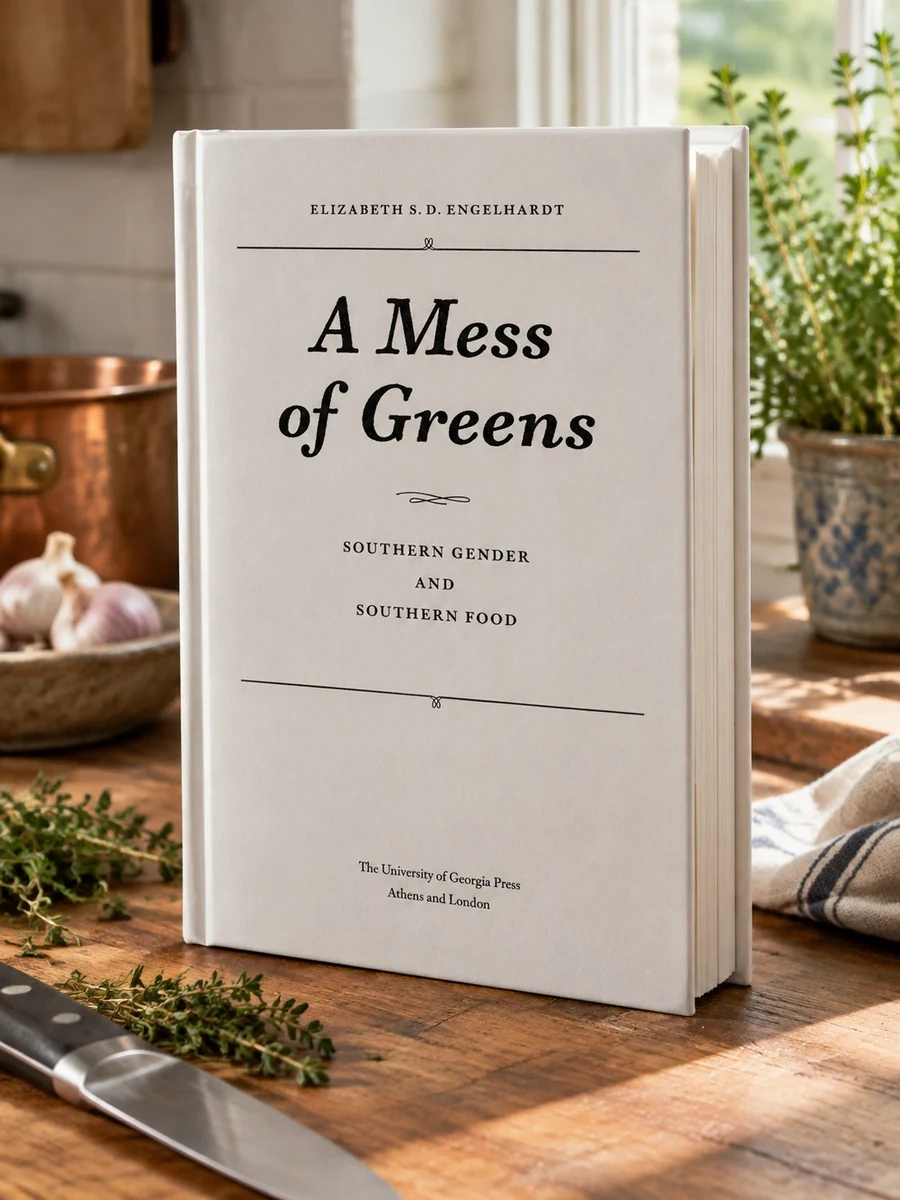
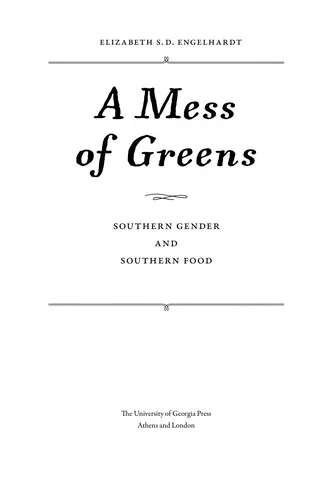
A Mess of Greens: Southern Gender and Southern Food
✍️ Engelhardt, Elizabeth S DA scholarly look at how southern women's food choices shaped social power.
Engelhardt moves beyond elite white narratives to explore the high stakes of defining southern food for poor whites and African Americans. She argues that kitchen dynamics during Reconstruction and Jim Crow were sites where races and classes interacted, often as servants and mistresses but also through shared tastes. The author uses specific cultural artifacts like mill literature and community cookbooks to show how everyday culinary decisions carried significant social weight regarding reputation and identity.
The book addresses the American South during the Reconstruction and Jim Crow eras. It considers the impact of industrialization and environmental degradation on southern communities, focusing on how these changes influenced the foodways of poor whites, farm families, and working-class African Americans.


📝 Description: A Mess of Greens: Southern Gender and Southern Food
💎 Expert review
📖 Why choose it
Why this book is worth reading
Scholars and readers interested in the sociological underpinnings of cuisine will find this text vital. It moves beyond elite white narratives to explore how poor whites and African Americans navigated kitchen dynamics as sites of racial and class interaction. By analyzing artifacts like mill literature and community cookbooks, Engelhardt reveals how mundane decisions, such as serving cold biscuits over hot cornbread, carried significant weight regarding reputation, hygiene, and piety. This book is essential for those seeking to understand the complex social power structures embedded in Southern foodways during a period of industrialization and shifting gender roles.
⭐ Reader reviews
Reader rating
Engelhardt offers a rigorous, scholarly examination of Southern food history that prioritizes analysis over nostalgia. The text is dense with theoretical frameworks from environmental and American studies, making it unsuitable for casual readers or those seeking traditional recipes. While the focus on community cookbooks and archival materials provides a fresh perspective on the voices of poor whites and working-class African Americans, the academic tone may alienate general audiences. It is a valuable contribution to food history but demands patience from its audience.
❓ Frequently asked questions
📖 Who should read this
Readers interested in the intersection of culinary history and social power dynamics in the American South. Ideal for scholars examining gender roles, class structures, and racial interactions through the lens of foodways during Reconstruction and Jim Crow eras.