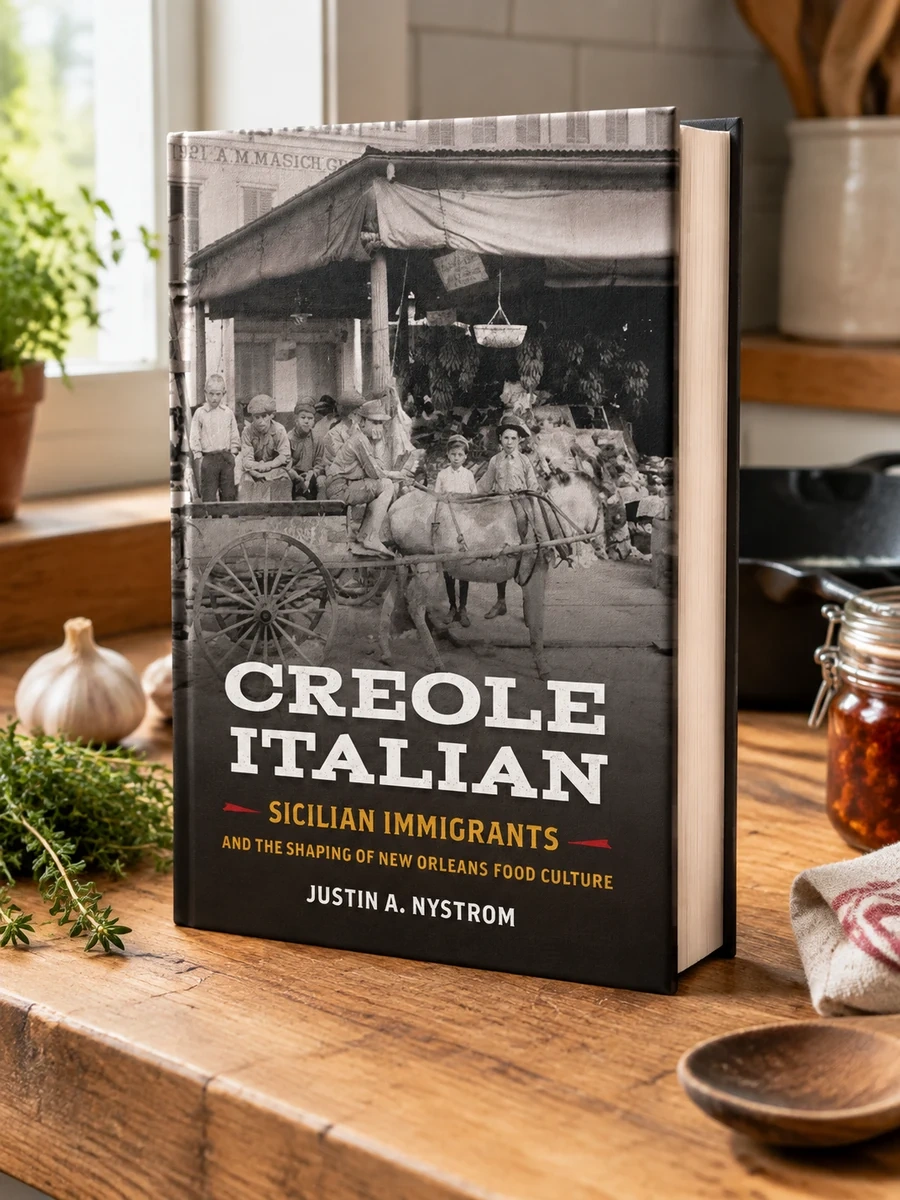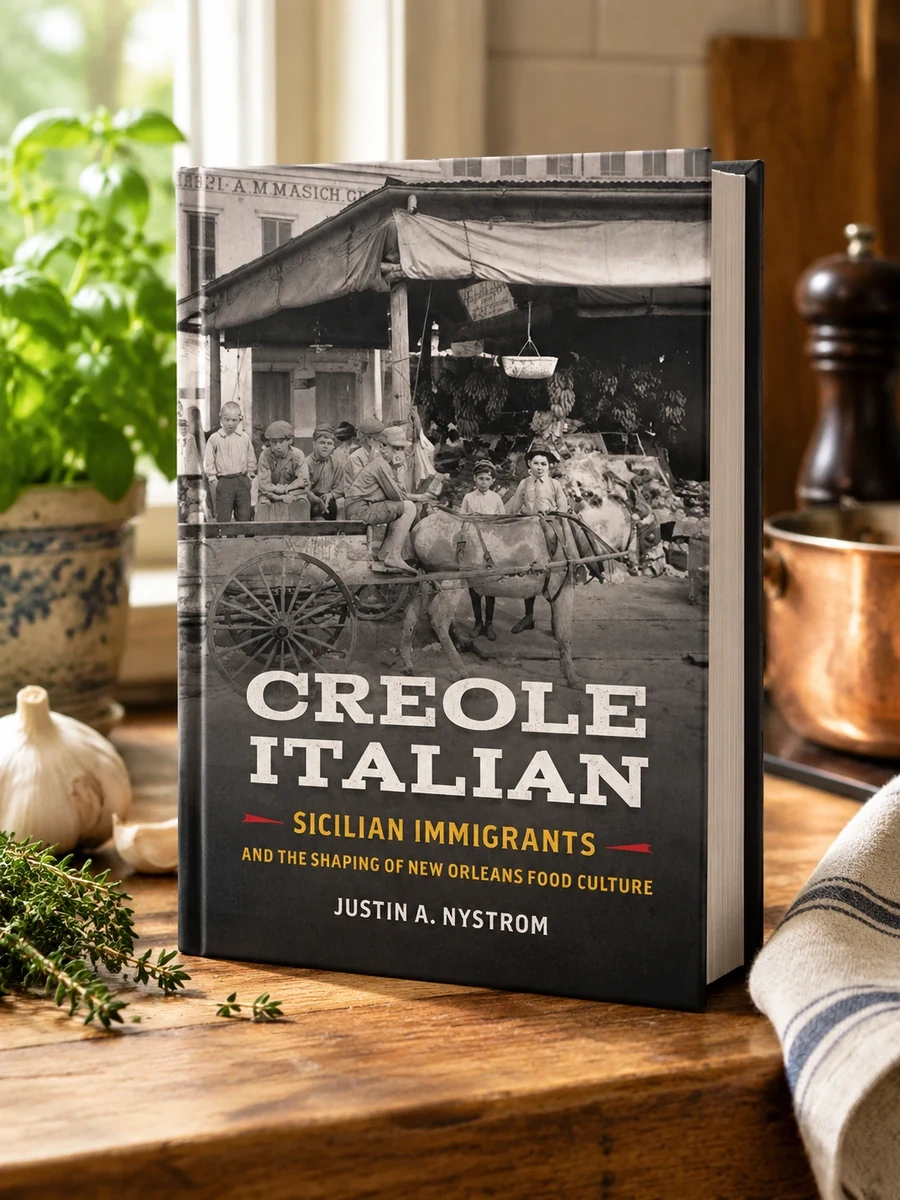
Creole Italian: Sicilian Immigrants and the Shaping of New Orleans Food Culture
✍️ Nystrom, Justin AA historical study of Sicilian immigrants' impact on New Orleans cuisine.
Nystrom challenges standard definitions of creole food by including Sicilian elements. He shows that pasta manufacturing and other trades were central to immigrant life. The book covers economic roles like running truck farms and operating bars. These activities influenced the broader culinary environment over decades. The author connects business decisions to cultural shifts in the city.
The book focuses on New Orleans, Louisiana, during the period from the mid-1830s to the 1970s. It addresses the nearly forty thousand Sicilians who entered America through this specific port in the nineteenth and early-twentieth centuries.


📝 Description: Creole Italian: Sicilian Immigrants and the Shaping of New Orleans Food Culture
💎 Expert review
📖 Why choose it
Why this book is worth reading
Readers interested in social science, ethnic studies, and regional cooking histories will gain a deeper understanding of how economic survival shapes culinary heritage. Justin A. Nystrom traces the arrivals of nearly forty thousand Sicilians to New Orleans from the mid-1830s through the 1970s, detailing how their work—from running truck farms and operating bars to sugarcane cutting and pasta manufacturing—redefined the local food landscape. Rather than focusing purely on recipes, the book demonstrates how concrete business decisions and daily trades drove major cultural shifts. Anyone wanting to understand the broader economic forces and immigrant contributions behind modern New Orleans creole food culture will find this rigorous historical analysis immensely rewarding.
⭐ Reader reviews
Reader rating
Justin A. Nystrom delivers a compelling historical analysis that successfully argues for the inclusion of Sicilian contributions alongside French, Spanish, and African influences in creole cuisine. By grounding his argument in the economic realities of pasta manufacturing, grocery sales, and restaurant operation, the author provides valuable substance to food history. However, this text is strictly an academic and social study; it offers no culinary instruction, simple recipes, or contemporary dining guides. Readers looking for a practical cookbook or a lightweight travel narrative will be disappointed by its scholarly focus. For serious food history enthusiasts and scholars of ethnic studies, it stands as a vital correction to traditional regional narratives.
❓ Frequently asked questions
📖 Who should read this
Readers interested in the historical roots of New Orleans cuisine will find this compelling. It suits those who appreciate academic depth over simple recipes. Ideal for food historians, sociologists, and curious cooks wanting to understand the Sicilian influence on Creole culture through economic and social lenses rather than just ingredients.