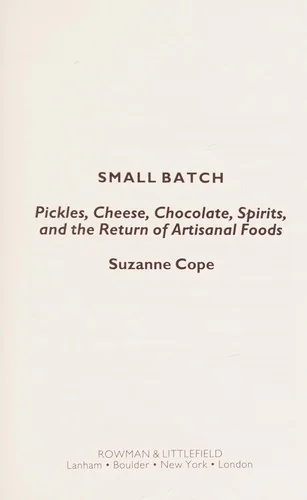
Small Batch: Pickles, Cheese, Chocolate, Spirits, and the Return of Artisanal Foods
✍️ Cope, SuzanneA historical and cultural study of the modern artisanal food movement through four key products.
Cope investigates the economic and social forces driving the craft food revolution. By interviewing more than fifty producers, she reveals how small businesses define their identity in a crowded market. The narrative moves from the past to the present, showing how historical traditions influence current practices in cheese making and spirit distilling. She argues that understanding this history is crucial for appreciating the value of specialty items found in modern grocery stores and markets.
This work sits at the intersection of social science and business economics, examining how American attitudes toward agriculture and small business have shifted. It addresses the rise of specialty markets and the changing definition of local food production from the colonial era through the twenty-first century.


📝 Description: Small Batch: Pickles, Cheese, Chocolate, Spirits, and the Return of Artisanal Foods
💎 Expert review
📖 Why choose it
Why this book is worth reading
This book provides essential reading for entrepreneurs, culinary historians, and consumers interested in the social and economic forces powering the craft food revolution. Through extensive interviews with over fifty contemporary producers, Suzanne Cope offers an insider look at how small-batch businesses construct their identities, leverage narrative, and navigate a crowded modern marketplace across four core categories: pickles, cheese, chocolate, and spirits. Readers looking to understand the business side of cottage industries or the cultural evolution of terroir will gain a nuanced appreciation for the historical traditions that give modern specialty items their value.
⭐ Reader reviews
Reader rating
Suzanne Cope delivers a insightful, well-researched examination of modern artisanal food production that successfully bridges historical precedent with current trade realities. Organized neatly around four key product categories, the narrative effectively analyzes how today's craft producers redefine artisanal identity while navigating economic challenges. However, prospective readers should note that the edition's own description makes clear this is a strictly analytical text; those seeking practical culinary instruction or simple recipes will find none here. For readers invested in food history, producer culture, and the social implications of local food networks, it stands as a thoroughly worthwhile shelf addition.
❓ Frequently asked questions
📖 Who should read this
Readers interested in food history and social science who want to understand the economic forces behind artisanal goods. Ideal for those curious about cottage industries and how small businesses define their identity within a crowded market landscape.