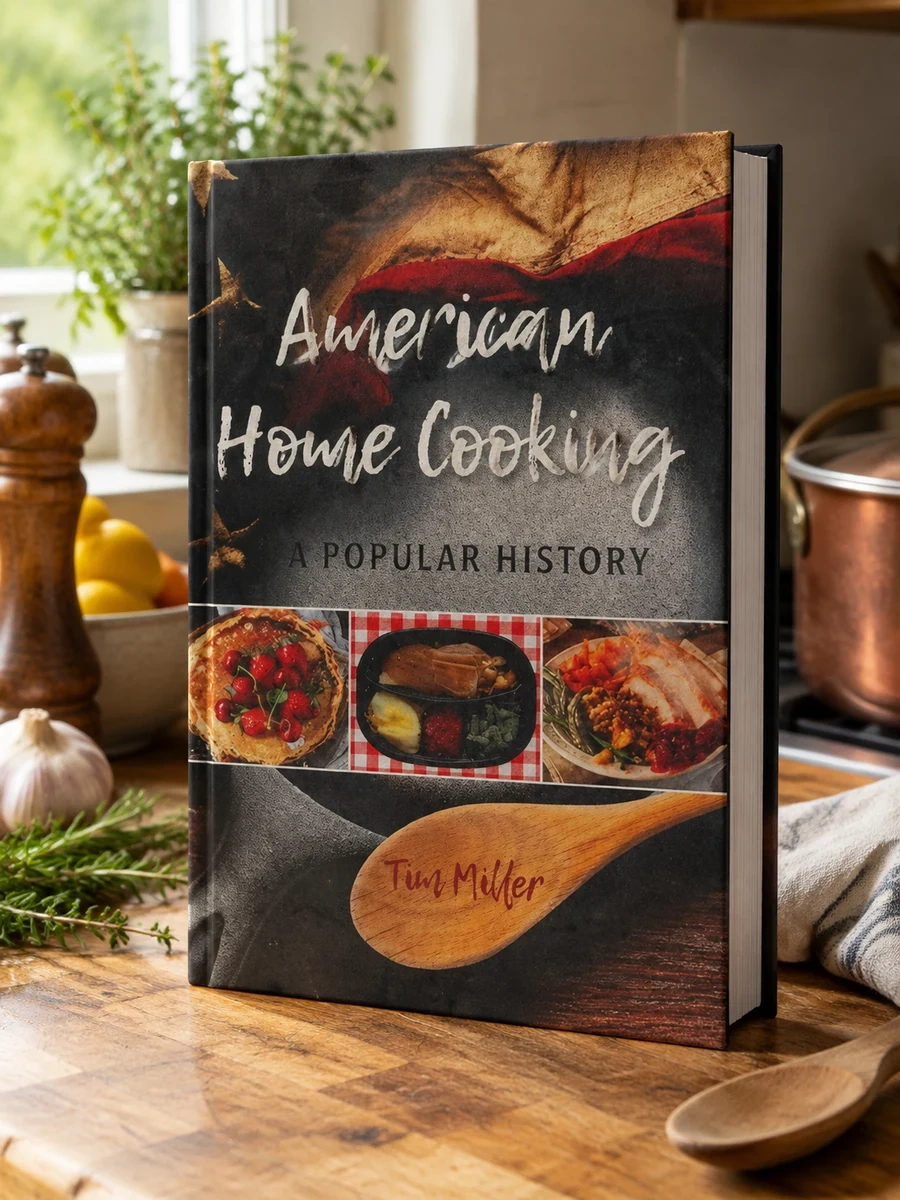
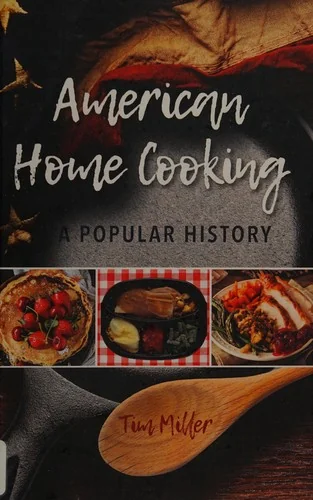
American Home Cooking: A Popular History
✍️ Miller, TimA historical look at why Americans keep cooking despite convenience culture.
The author argues that American cooking persists due to complex historical forces rather than simple habit. He maps the shift in dining behaviors across a spectrum defined by processing levels. Key drivers include corporate appliance marketing and educational movements like home economics. The narrative also accounts for social shifts, such as religious reforms and sixties counterculture, which altered domestic expectations. This approach explains the enduring presence of the kitchen as a central home space.
The book covers American dining history from the early eighteen hundreds to the late twentieth century. It focuses on North American trends, specifically addressing how industrial and social changes influenced domestic cooking practices across the United States during this two hundred year period.


📝 Description: American Home Cooking: A Popular History
💎 Expert review
📖 Why choose it
Why this book is worth reading
Cultural historians, sociologists of food, and readers curious about domestic life will gain a clear understanding of why home cooking persists in an era dominated by convenience options. By analyzing two centuries of dietary shifts, Tim Miller highlights how food and appliance manufacturers, nineteenth-century religious reforms, early twentieth-century home economics, and nineteen-sixties counterculture all contributed to keeping the kitchen at the center of the American household. Readers looking for the historical and industrial forces behind modern dining habits will find this structural analysis of culinary persistence both insightful and grounded.
⭐ Reader reviews
Reader rating
Tim Miller delivers a compelling cultural history that thoughtfully balances industrial analysis with social movements to explain why Americans still cook at home. Placing food habits along a spectrum from raw ingredients to processed convenience meals gives his argument strong analytical clarity. However, this text is strictly an academic and historical exploration rather than a culinary guide. It does not suit home cooks searching for practical techniques, instructional advice, or traditional recipes.
❓ Frequently asked questions
📖 Who should read this
Readers interested in the historical forces shaping American kitchens rather than those seeking immediate meal solutions. Ideal for history enthusiasts and sociology students who want to understand how corporate marketing and social movements influenced domestic cooking habits over time.